
Learn more

Welcome to The 404 Archives – where we spill the tea on what actually works (and what spectacularly doesn’t). In every issue, we’ll tackle the topics we’re constantly explaining to clients, peers, and that one uncle who keeps asking us to “just make it pop.”
Thanks for reading The 404 Archives! Subscribe for free to receive new posts and support my work.
Our goal? Give you the kind of real talk and actionable frameworks that help you build websites that actually do their job. No fluff, no corporate speak, just the truth about what makes a website work in 2026.
Fun fact: 94% of first impressions are design-related, and 38% of people will bail on your site if the layout is unattractive. Yet somehow, companies are still treating their websites like digital brochures.
Here’s the thing: most people think website strategy is just “planning what goes where.” Plot twist—that’s barely scratching the surface.
Website strategy is the intentional framework that connects your business goals to user needs through purposeful design, content, and functionality.
Translation: It’s the blueprint that ensures your website isn’t just pretty, but actually does something for your business and your users.
A proper website strategy addresses:
The best website strategies create clarity around one critical thing: what job is your website being hired to do?
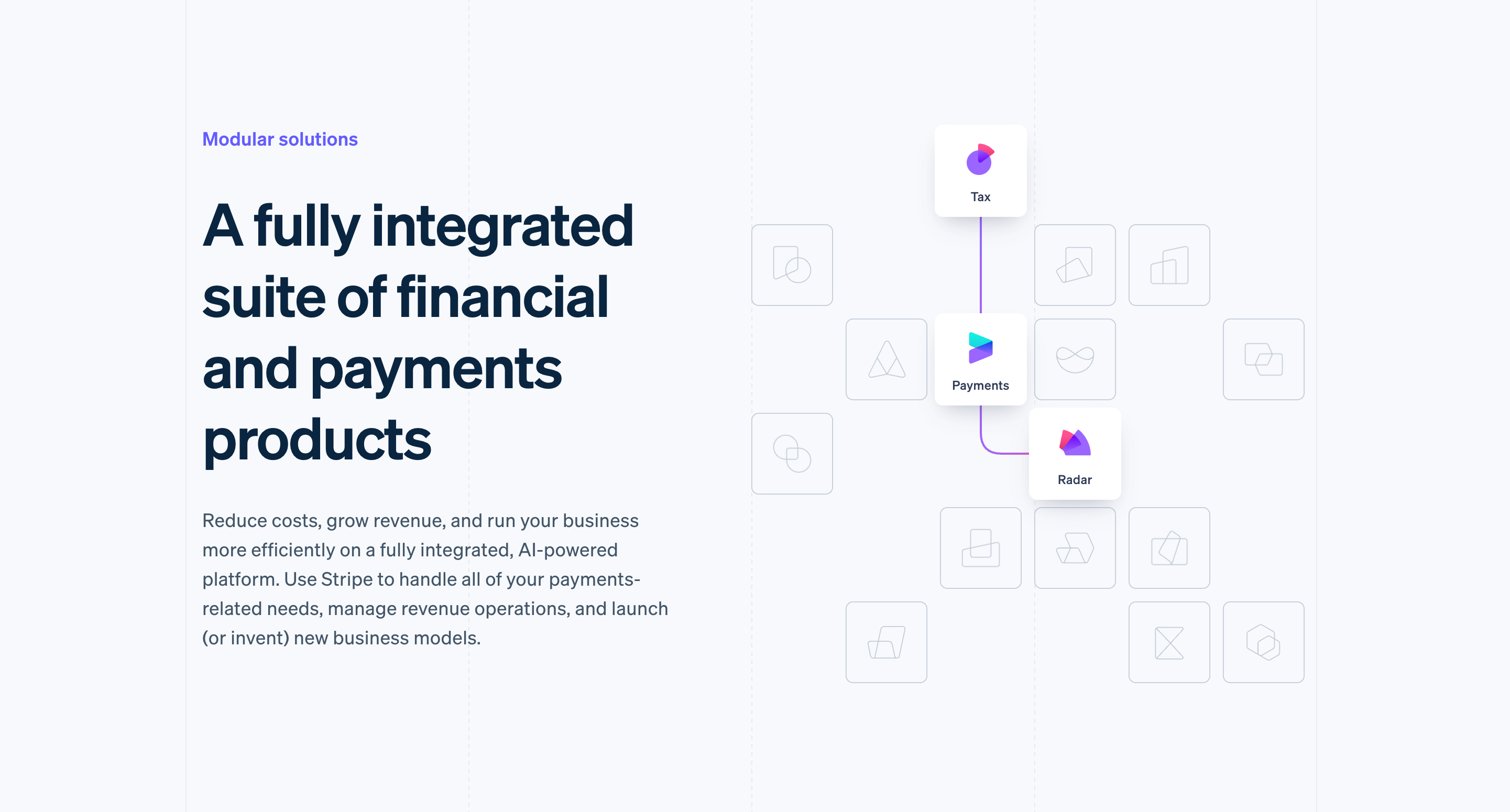
Take Stripe. Their site isn’t trying to be everything to everyone. It’s laser-focused on one job: get developers excited about building with their payment infrastructure. Every element—from the interactive demos to the technical docs—serves that singular purpose.
Or look at Linear. Their website strategy positions them as the antithesis of bloated project management tools. Fast, beautiful, purpose-built for modern teams. The site experience literally demonstrates the product philosophy.

These aren’t accidents. They’re the result of strategic decisions about what to prioritize, what to cut, and how to deliver value at every touchpoint.
Let’s clear up some confusion, because apparently everyone’s a “web expert” now.
A website strategy is NOT just:
A sitemap (far too basic) Your site needs more than a list of pages. That’s like saying a recipe is just a list of ingredients.
A mood board from Pinterest (far too vague) Cool vibes don’t equal conversion. Your site isn’t Tumblr circa 2014.
Whatever your competitor is doing (far too derivative) Just because they have a chatbot doesn’t mean you need one. Strategy isn’t copying homework.
A redesign every time you’re bored (far too expensive) Changing colors because you “feel like it” isn’t strategy. It’s interior decorating with a credit card.
Instead, website strategy should be:
Focused – Clear objectives that everyone can get behind
User-centered – Built around real behaviors, not assumptions Measurable – With KPIs that actually matter
Flexible – Able to evolve without starting from scratch
The death of most websites isn’t bad design—it’s lack of direction. Pretty things can still be utterly useless.
Because your website is your hardest-working employee, and right now it’s probably underperforming.
The hard truth:
Here’s what actually happens without website strategy:
Scenario 1: The Kitchen Sink You try to cram everything onto the homepage because “what if someone needs it?”
Result: cognitive overload, decision paralysis, and a bounce rate that makes you want to cry.
Scenario 2: The Ghost Town Your site looks great but nobody knows what to do there. Beautiful, minimal, completely useless. Like an art installation you can’t touch.
Scenario 3: The Frankenstein Different teams built different sections with different goals. Your site has multiple personalities and none of them are charming.
What strategic websites do differently:
They make decisions. Hard ones. About what matters most and what can go. About who they’re for and (crucially) who they’re not for.
When Airbnb rebuilt their website strategy around “Belong Anywhere,” they didn’t just slap a tagline on there. They restructured the entire experience—from how you search to how listings are presented—to reinforce that emotional promise. The result? A platform that feels fundamentally different from booking.com or hotels.com.

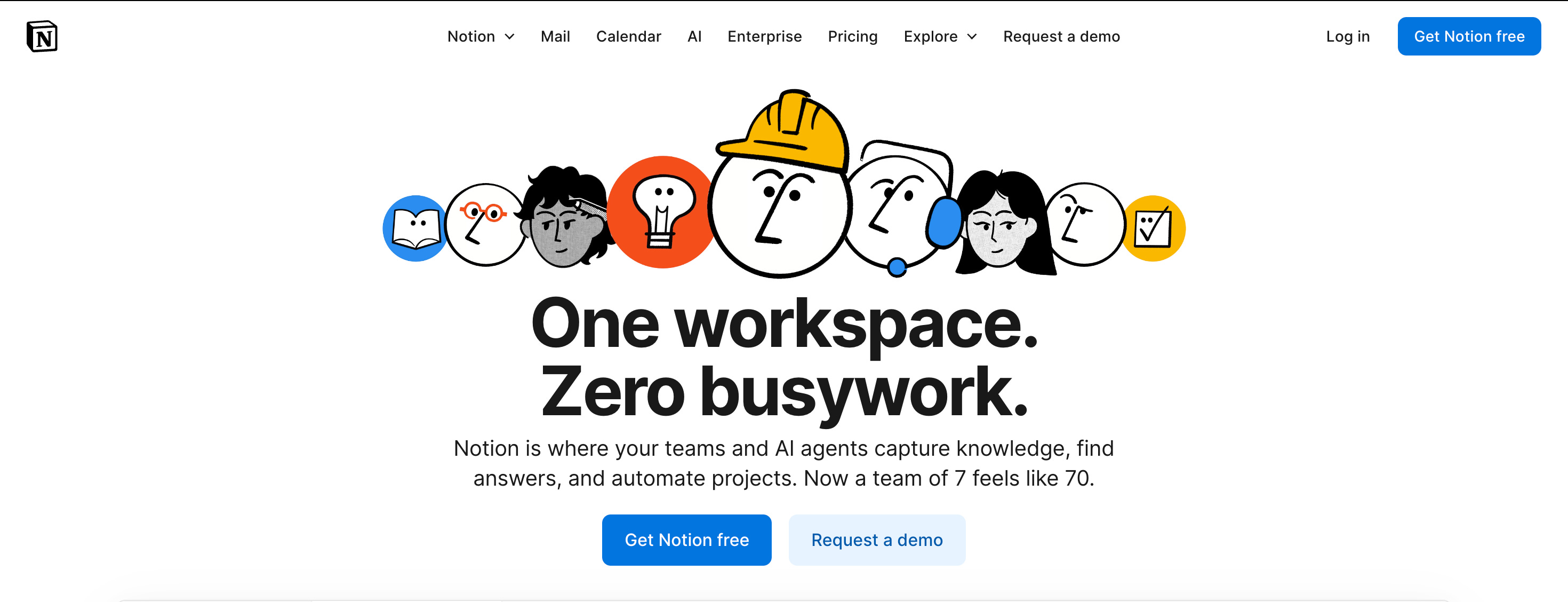
Or take Notion. Their website strategy doesn’t try to explain every feature. Instead, it focuses on transformation: showing you what becomes possible when your tools get out of the way. The site is organized around use cases, not feature lists, because that’s what actually helps people understand the value.
The commercial impact? Notion hit a $10B valuation. Airbnb is worth $79B+. Strategy isn’t soft. It’s money.
Building website strategy means getting honest about what’s working, what’s not, and what actually needs to change. It’s research, synthesis, and a whole lot of killing your darlings.
Start with the truth:
Audit your current state – What’s your site actually doing right now? Check analytics, run user tests, dig into support tickets. Where are people dropping off? What questions keep coming up?
Define success – What does “working” look like? Be specific. “More engagement” isn’t a goal. “30% increase in qualified demo requests” is.
Know your users – Not who you think they are. Who they actually are. What are they trying to accomplish? What’s standing in their way? Survey them. Interview them. Watch them use your site and resist the urge to explain things.
Map the journey – How do people actually move through your site? Not how you want them to—how they do. The gaps between intention and reality are where strategy happens.
Prioritize ruthlessly – You can’t optimize for everything. Choose the one metric that matters most. Then build everything else around supporting that north star.
Make it cross-functional – Website strategy can’t live in marketing alone. Get engineers involved. Talk to sales. Loop in product. The best strategies pull from everyone who touches the customer experience.
Build in flexibility – Your site will need to evolve. Build a strategy that can handle new features, content, or pivots without requiring a complete rebuild every time.
Having the strategy is one thing. Actually using it? That’s where most companies drop the ball.
A website strategy should inform decisions across your entire organization:
Marketing:
Product:
Sales:
Customer Success:
Leadership:
The best way to put strategy to work is through clear decision-making frameworks. When someone wants to add a new section, pop-up, or feature, ask:
Strategy isn’t a document that lives in a deck. It’s a living framework that guides every decision about your website.
🔥 The Jobs-to-be-Done Framework Instead of organizing your site by what you offer, organize it by what users are trying to accomplish. Ask: “What job is our website being hired to do?” Then structure everything around that.
🔥 The One Metric That Matters (OMTM) Choose the single metric that best represents success for your site right now. Everything else is secondary. This forces clarity and prevents the “dashboard of vanity metrics” syndrome.
🔥 The Kill/Keep/Optimize Exercise Go through every page and element. Kill what doesn’t serve the strategy. Keep what’s essential. Optimize what’s working but could work better. Be ruthless.
🔥 The 5-Second Test Show someone your homepage for 5 seconds. Then ask: What does this company do? Who is it for? What should I do next? If they can’t answer, your strategy needs work.
Your website is either working for you or against you. There’s no neutral. And the difference between a site that converts and one that collects dust isn’t budget or fancy features—it’s strategy.
A solid website strategy gives you clarity on what to build, what to cut, and how to measure success. It aligns your team and helps you make confident decisions. Most importantly, it ensures your website actually serves the people using it.
So stop treating your website like a chore and start treating it like the growth engine it should be.
Hit reply and tell us: What’s your biggest website headache right now? We read every response.