
Learn more
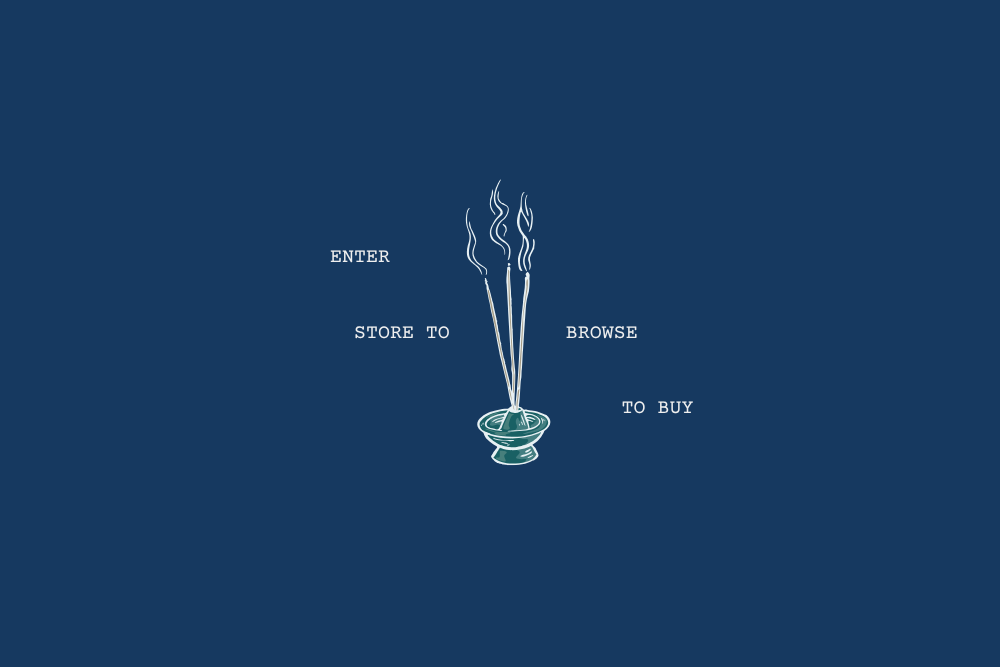
I was window shopping on the Seminyak strip in Bali. I had just taken my first ever surfing lesson and I was fully in my surfer girl era. (Fully convinced I was about to change my entire personality.) I walked past a surf store and something pulled me in. The scent hit first.
Ocean, wood, something warm.
This was the kind of store where you can tell within ten seconds that nothing in here is cheap. But you still want to stay.
I knew I was not buying a surfboard. I was a tourist who had just figured out how to stand on one. And yet I walked straight in and I already knew I was going to leave with something.
There was a guy in a cap sitting behind a dark wood counter. A stack of postcards next to him. He looked up, asked if I needed help. I said I would let him know. And he left me alone. I took my sweet time moving through every corner of that store, fully immersed. Not looking for anything specific. I just wanted to be inside the experience. And at some point I found them. These beautiful incense sticks.
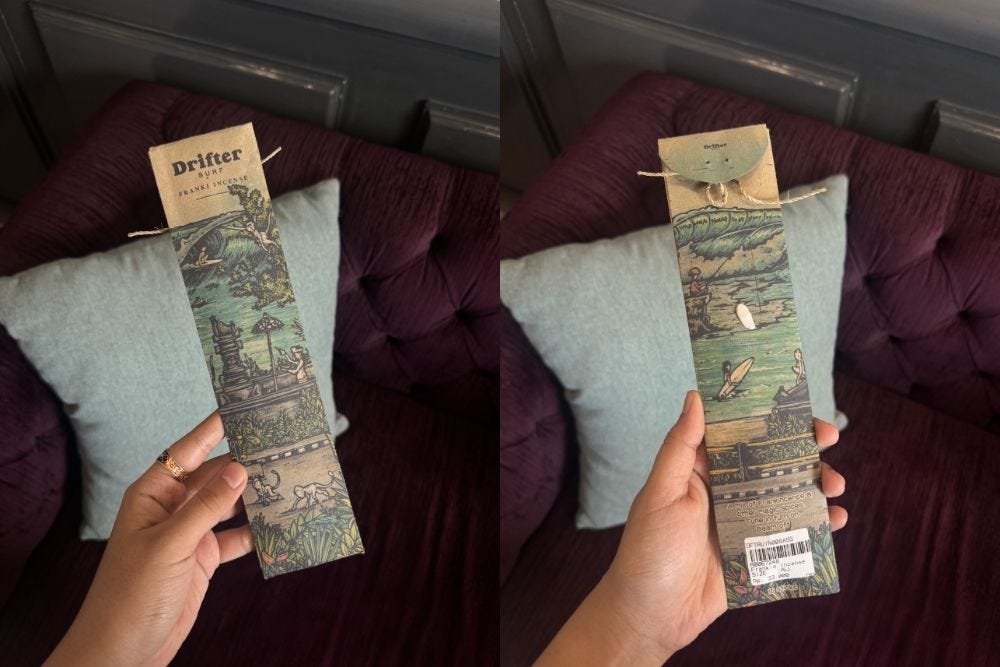
Yes. Of course I got them!!
Look at that packaging.
And an incense stick is better than a fridge magnet. (No hate to them as souvenirs. I am just saying.)
I knew from the second I stepped inside that I would leave with something, even if it was small. I wanted to be part of the experience. I just needed to find the one thing I could actually take home as my starting point.
Most online businesses have not done this. The service exists. The Instagram exists. And when someone finds you for the first time, there is no scent, no warm wood, no guy in a cap who calls out once and then trusts you to find your own way.
There is just everything, all at once, with no clear signal of where to start or what the smallest way in might be. The entry point was never designed. It just happened. And the first sale just keeps not happening.
What is the first thing you say to someone when they find you?
Before The Buy
The first sale never skips the relationship. Not for an online service business, not for a store near the Seminyak beach, not for anyone. The question is whether that relationship is built intentionally or by accident. Most founders put everything into the offer. The website, the pricing, the portfolio, the sales page. And they leave the trust infrastructure to chance. Someone finds them, pokes around, does not quite feel ready, and leaves.
The reader was never lost. They were just at the beginning of a relationship the business had not planned for.
The step before the MVP is not a marketing tactic. It is a strategy decision. It says: here is who I am, here is what I do, and here is the smallest way you can step inside my world before you decide anything.
Mid-Funnel Masquerading
I had a lead magnet called the ‘Bizz Clarity Calculator’. Three steps, a detailed pipeline, a breakdown of everything a founder might need before building their website. I was proud of it. It was packed with so much value.
A little too much.
It would have easily overwhelmed anyone. And it was completely wrong of me to expect anyone to go through that, especially if they were meeting me for the first time.
Imagine the surf store telling me what I need in order to start my surfing career in six months. No. Because I was just browsing.
The problem was not the value. The problem was the reader it assumed. The calculator was built for someone who already understood the offer, already trusted the process, already knew they needed a website and were almost ready to book.
It was mid-funnel content wearing a top-of-funnel costume.
And the people finding me for the first time had no idea what to do with it. Nobody needs a detailed masterclass in the first second of knowing me.
Most lead magnets are this. They are built around what the founder wanted to give, not what a cold reader actually needs at entry. The founder is excited about the depth of their thinking.
But the reader just found you thirty seconds ago. They need one clear, easy thing that helps them feel seen and makes them think: yes, this person gets it.
Design The Door
So I rebuilt it. Stripped it all the way down.
And created the ‘Builder Clarity Check’. (Still a bit of a tongue twister, I know.)
A toned down version designed specifically for someone at the very beginning of their journey with me. Not a pipeline. Not a calculator. A checklist for clarity.
In the last 7 days, 25 new subscribers came through that entry point.
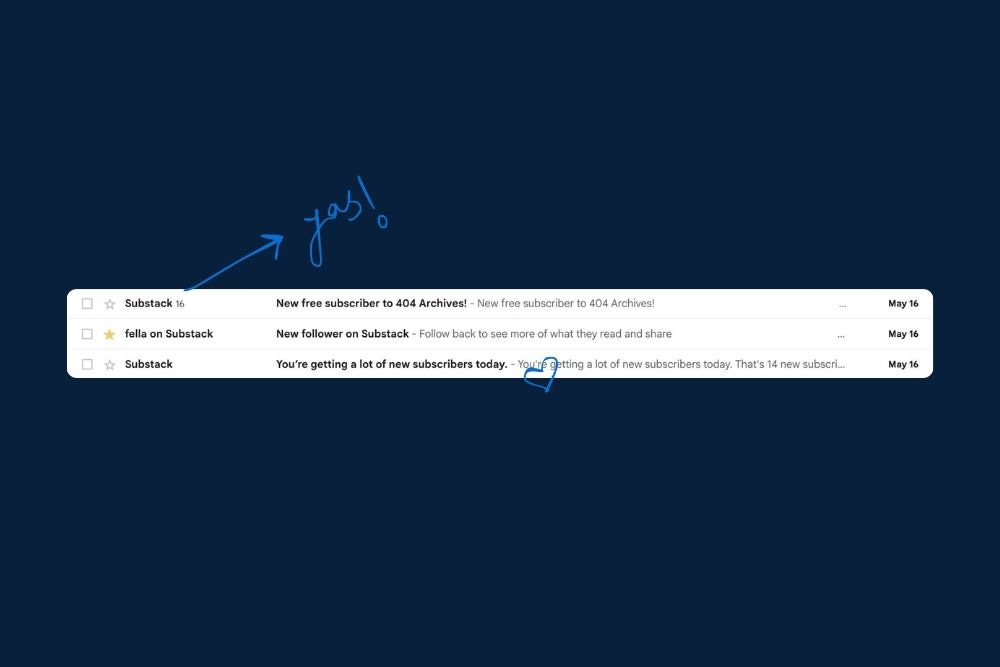
And what made it work was not just the simplicity. It was the auto-filtering. The checklist guides people to take the next action based on their own answers. They discover where they are going themselves. Which is exactly what happened in that surf store. Nobody told me to pick up the incense sticks. The store was designed in a way that made me find them.
I use this framework with clients now too. When we are working on their links page, the question I always ask is: which box is your entry point? Not your most impressive offer. Not your most expensive one. The one designed for someone who just walked in.
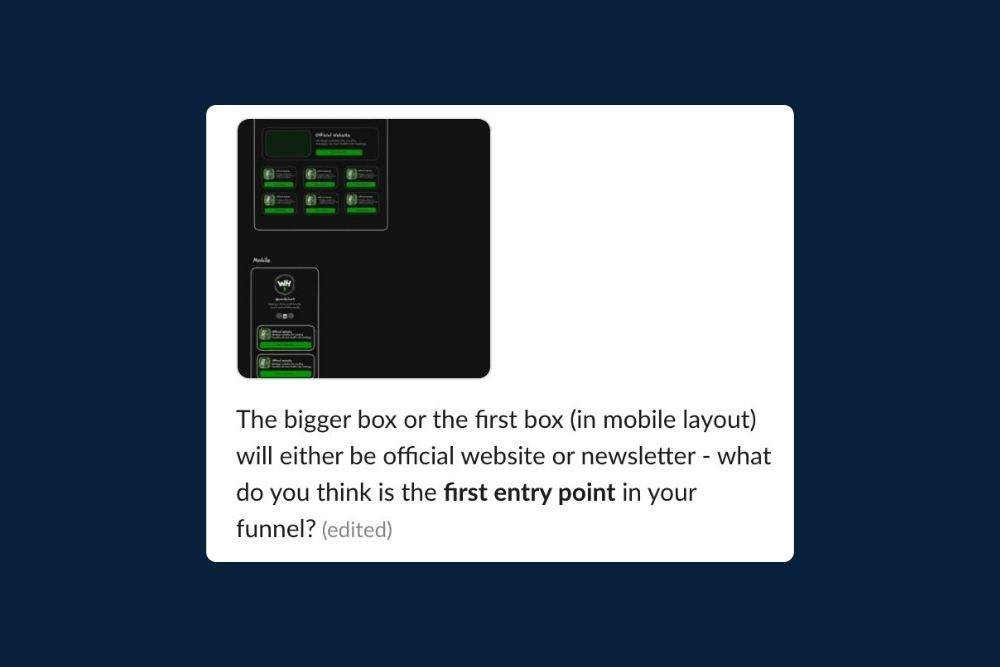
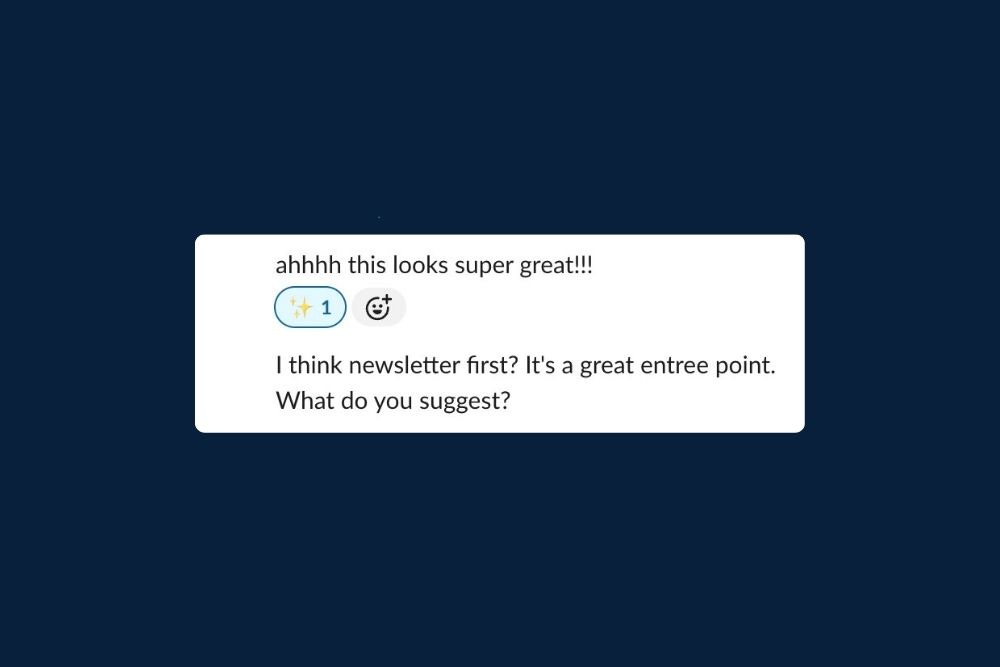
One of my clients, saw the wireframe and said: “I think newsletter first? It’s a great entry point. ” He got it immediately.
Because once you see the door, you cannot unsee it.
The entry point is not a marketing asset. It is the decision your business makes about who it is trying to receive. And like every brand decision, it communicates something whether you intended it to or not.
An overwhelmed entry point says: I built this for myself.
A missing entry point says: I assumed you already knew where to start.
A well-designed entry point says: I knew you were coming. I made something for you.
The surf store in Seminyak did not follow me around or hand me a leaflet. They built a world coherent enough that a tourist who was never going to buy a surfboard walked out with something in her hands and a memory she still thinks about. That is the entry point doing exactly what it was designed to do.
Next edition I want to get into what happens after the entry. Once someone is in, how do you move them from warm to ready? Because the door is only the beginning. There is a whole room on the other side of it.
I’m Kanza. I run NVRMND Studio. We build websites for founders and studios who are ready for their online presence to actually match the work they’re doing. This blog is where I think out loud about strategy, design and what it really takes to build something worth building. If you’re ready to stop renting your presence, let’s talk.
P.S. The Builder Clarity Check is for builders who want to get so clear on their own story that it becomes simple to communicate their unique value. If you are building something you care about, this might help.
P.S. I’m rooting for you. Always. See you next Monday for the new issue of The 404 Archives.

%20newsletterblog.png)
%20(1).png)
.jpg)